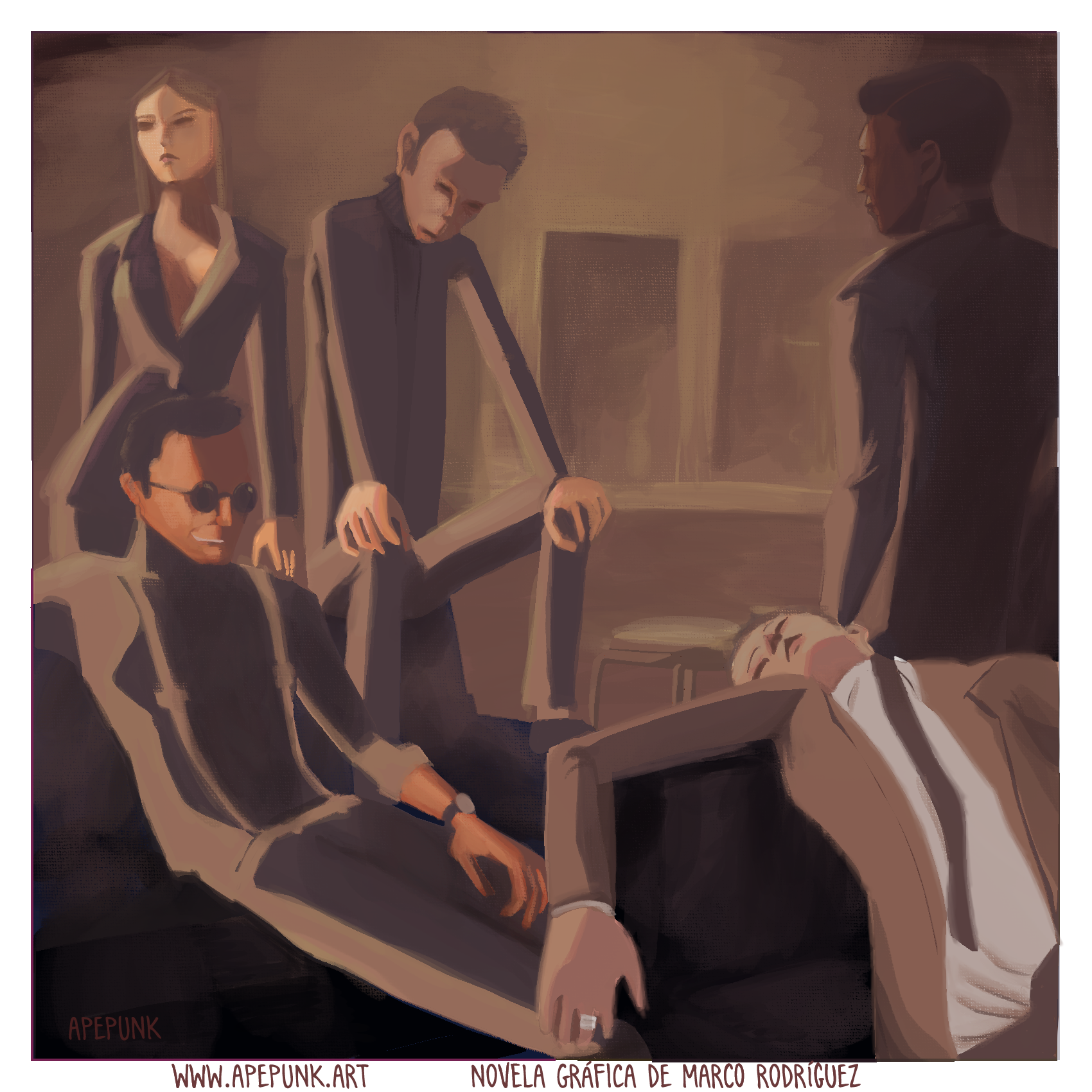
THE WORK
APEPUNK is an ongoing science fiction graphic novel.
PRESENTATION
APEPUNK explores dehumanization as the logical outcome of systems designed to maximize efficiency, control, and productivity.

In this world, consciousness is no longer a human privilege. Through technological advances, millions of apes have been “awakened” and integrated into society as sentient beings. But this integration does not represent progress — it marks a new stage of exploitation affecting both humans and apes alike.

The planet is governed by the G-100, a technocratic oligarchy that defines its direction from the top. At the center of the conflict lies a decisive initiative: the full liberalization of consciousness (human or simian), a legal framework that would allow it to be modified as just another resource, under the discourse of efficiency and adaptation.

As this project advances, social violence intensifies. The stability of the system begins to fracture. The emergence of a terrorist organization known as MORBID triggers a series of targeted assassinations against members of the G-100.

The story follows FRAN, an elite security chief serving the G-100, who adopts DEE, a young conscious ape — not out of compassion, but from a deeply personal need for redemption. Alongside MAX, FRAN’s father and a disillusioned former police officer, they become entangled in a tragedy where there is no heroism, no clear solutions — only the struggle to not lose themselves completely.

APEPUNK is a dark and deeply human narrative, influenced by science fiction and classical tragedy. It is intended for readers drawn to dystopian worlds and graphic novels that prioritize moral conflict over spectacle.
THEMES
Consciousness
In APEPUNK, consciousness does not disappear — it is managed. It becomes an object of technical intervention and political regulation.

Emotions such as fear, fatigue, doubt, and stress are no longer treated as inevitable human experiences, but as inefficiencies to be managed, corrected, or suppressed.

The conflict does not arise from a lack of consciousness, but from its forced optimization. To feel too much, to hesitate, or to fail becomes unacceptable in a system that demands constant performance.

What defines the human condition is reconfigured as a problem the system claims it can solve.
Power
In APEPUNK, power is not exercised through direct prohibition, but through structures that present themselves as inevitable.

The G-100 does not rule by imposing, but by offering choices that cannot truly be refused. The possibility of “enhancing” consciousness is framed as an individual decision — yet refusing it means falling behind, becoming alienated, and losing the ability to compete in terms of efficiency and productivity.

The system does not force — it conditions.

In doing so, freedom becomes a simulation, and adaptation a requirement for continued existence within the social order.
Dehumanization
In APEPUNK, dehumanization is not about losing consciousness or abandoning ethics — it is about becoming functional.

The system does not ask how outcomes are achieved, only whether they meet expected parameters. As long as performance remains acceptable, emotional exhaustion, self-rejection, and internal fragmentation are irrelevant.

Humans and apes alike become dehumanized by accepting their role as interchangeable instruments within a system that operates efficiently — even as it destroys those who sustain it.
STRUCTURE
Volume I: Lock-in effects
The world presents itself as functional. Power operates with apparent stability, and violence exists, but remains contained — absorbed into the fabric of everyday life. Society has learned to coexist with the systematic erosion of the human condition as part of its landscape.

The volume closes when violence breaks through the surface, revealing a damage that was always there — one the system neither corrects nor stops, because it is intrinsic to its operation.
Volume II: Switching costs
The facade begins to fracture. Conflict moves to the center of public spectacle, and violence gains political visibility. It no longer operates at the margins — it erupts at the core of power, contaminating everything it touches.

The elite distributes blame as it always has: selectively, strategically, and as an example. Yet this time, the sacrifice fails to restore stability and instead exposes its fragility.

The volume closes as the system is pushed into an extreme condition, forced to operate beyond its usual parameters. What follows is no longer a controlled correction, but a reaction whose consequences cannot be fully anticipated.
Volume III: Gatekeepers
Personal bonds become a form of currency. Survival no longer depends solely on endurance, but on deciding who is exposed, who is protected, and who is silently betrayed.

The volume reaches its critical point when it becomes clear that both obedience and rebellion demand irreversible concessions. Each character crosses a threshold from which there is no return without losing something essential.
Volume IV: Killer Acquisitions
The order destabilizes: purges, betrayals, displacement, and loss reshape the balance of power. Yet the system does not collapse. It absorbs the impact, eliminates what it deems dysfunctional, and continues.

Those who survive can no longer inhabit the world in the same way. Each faces the consequences of their choices, with no promise of redemption or definitive closure.

In the end, only loss remains — of relationships, of certainty, and, in some cases, of the ability to recognize themselves as human.
PROJECT STATUS
The project is currently in development.

The script is complete, and the artwork is progressing steadily.

The story is planned to be released in volumes, accompanied by documentation of the creative process, ultimately leading to a complete edition.
CHARACTERS
The system survives. They absorb the damage.
FRAN
Head of Security — G-100
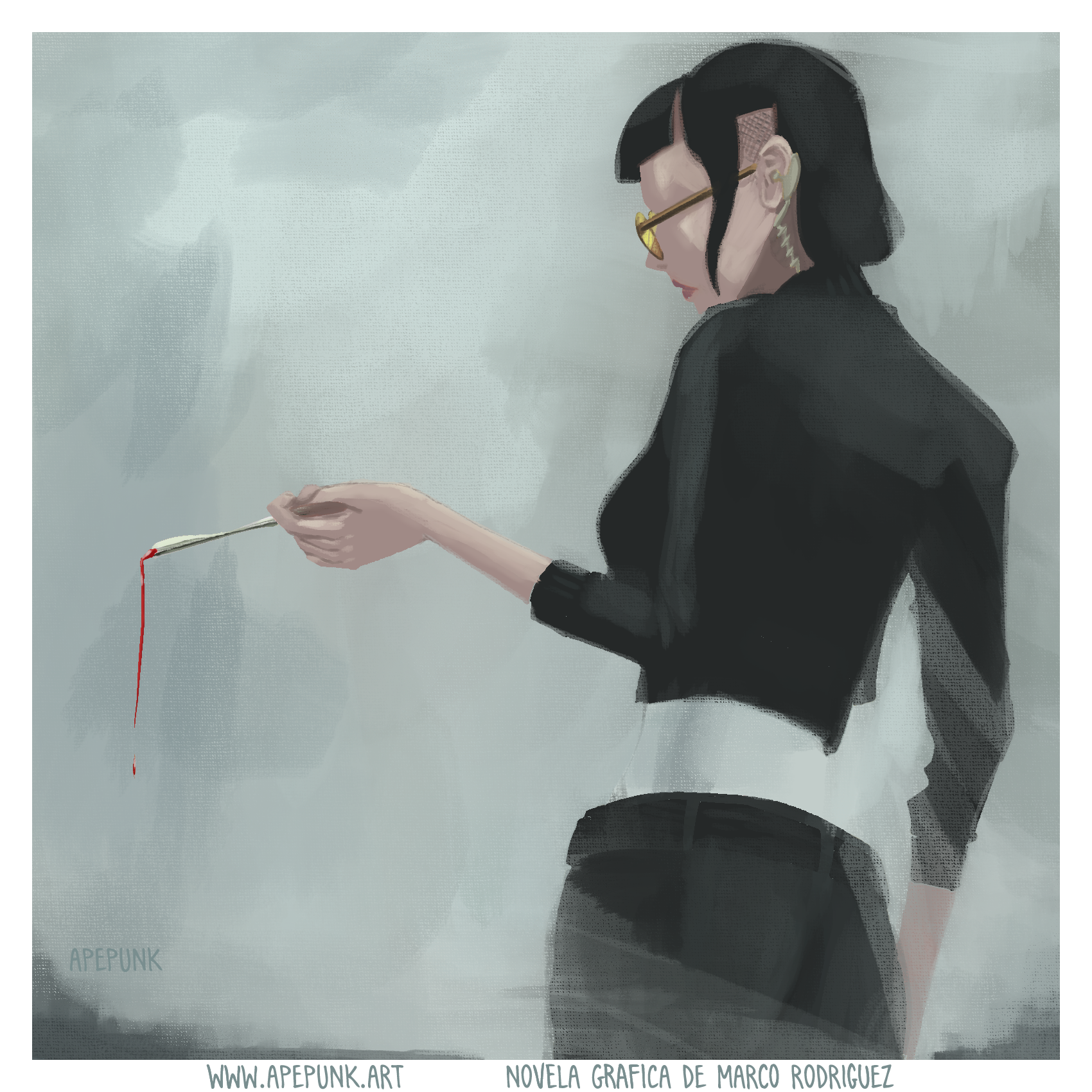
FRAN has built her identity within the system. She believes in order, in anticipating conflict, and in containing violence as a means of maintaining stability.

Her role is to protect the G-100 — the oligarchs shaping the future — even when that future demands morally uncomfortable decisions. For her, obedience is not submission, but professionalism.

Her fracture does not come from ideological doubt, but from the quiet erosion of sustaining a system that demands emotional numbness. FRAN has learned to shield herself, to reduce the world to protocols and threats, convinced that feeling less is a way to survive.

Adopting DEE is not an act of pure compassion, but an intimate attempt at redemption — the belief that saving someone might redeem the damage she helped normalize. From that moment on, FRAN must choose between preserving the position that protects her within the system, or committing to a bond that exposes her and makes her vulnerable.
Core line: The system requires tools, not people.
DEE
Young Conscious Ape
DEE enters the human world convinced that consciousness is enough to belong — that understanding the rules will be sufficient to integrate.

Through his relationship with FRAN and MAX, he believes he has found a space for protection and learning within the system.

He soon discovers that consciousness does not produce dignity, but vulnerability. The system rewards emotional distance, efficient cruelty, and the ability to look away.

Pushed by the violence of a world that once promised integration, DEE begins to make decisions driven not by justice or redemption, but by survival.

His arc is not one of growth, but of erosion: preserving even a fragment of dignity begins to require the gradual sacrifice of what once made him human.
Core line: Understanding the world does not make it livable.
MAX
Former Police Officer
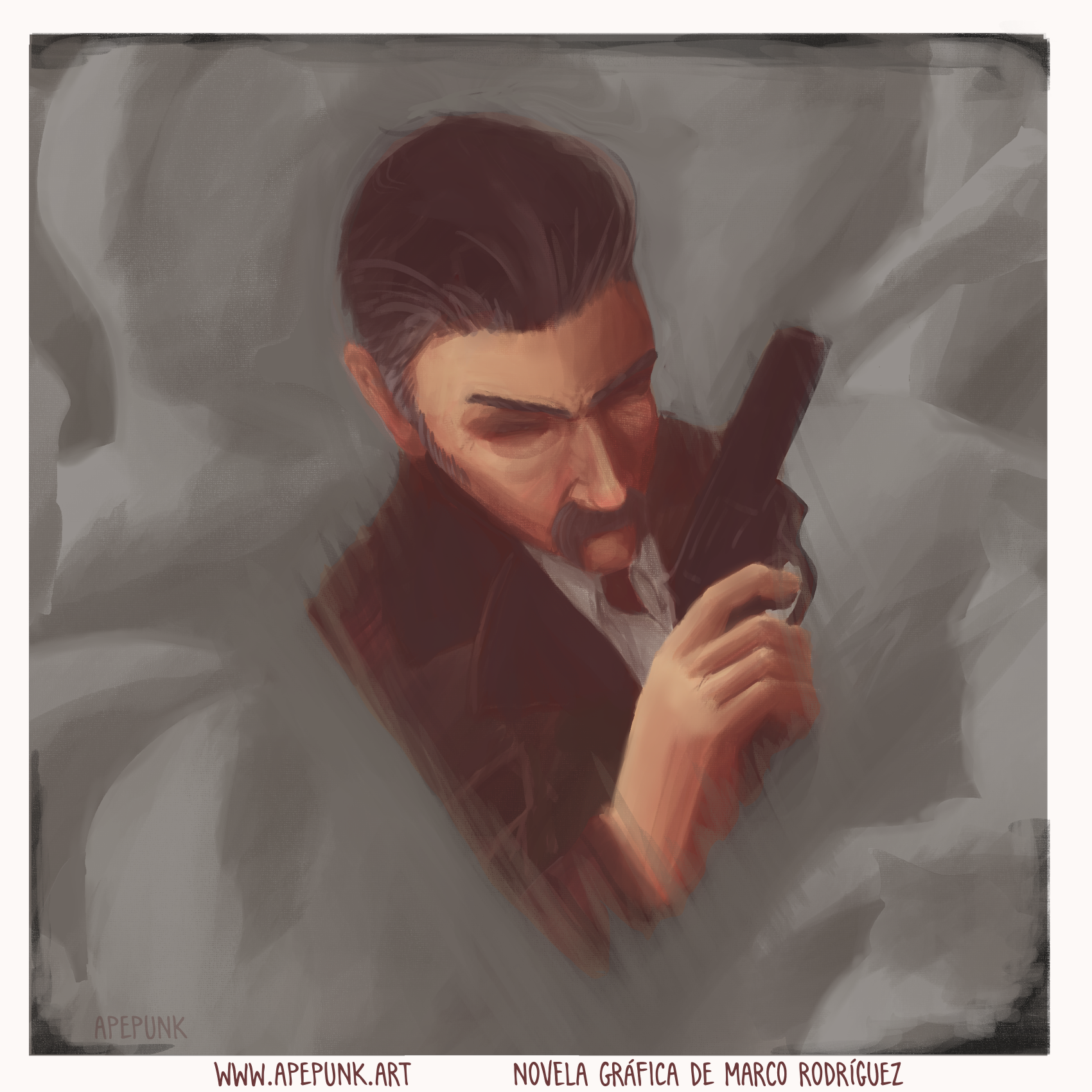
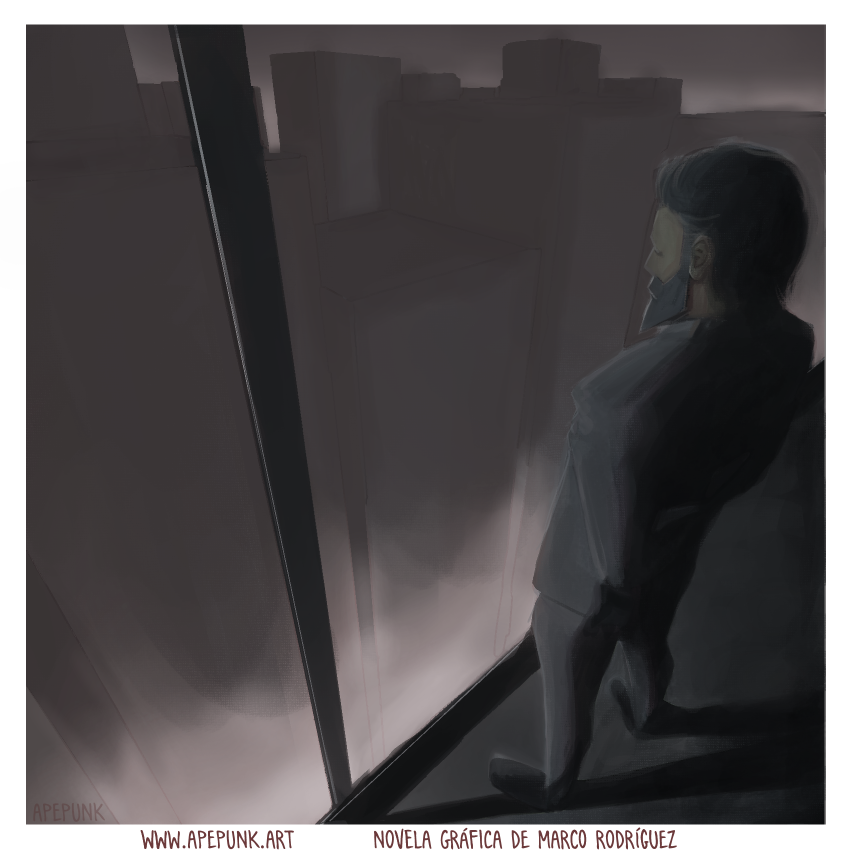
MAX is a retired police officer displaced by time. He was shaped by the belief that public service carried responsibility and meaning. He witnessed how those principles gradually eroded, reduced to the mere management of damage. He stepped away when he realized that staying would require abandoning the values that had once sustained him.

As a father, he tried to pass on discipline and moral clarity, convinced that it would be enough to prepare FRAN. Over time, he comes to understand that he failed to offer emotional presence — and that absence defines the guilt he carries: having shaped character without providing refuge.

Faced with the danger surrounding FRAN, and with DEE’s arrival, MAX recognizes one final opportunity to be present. Not as a savior, but as someone who stays.
Core line: Holding onto principles can leave you alone.
RED
Visible Leader of MORBID
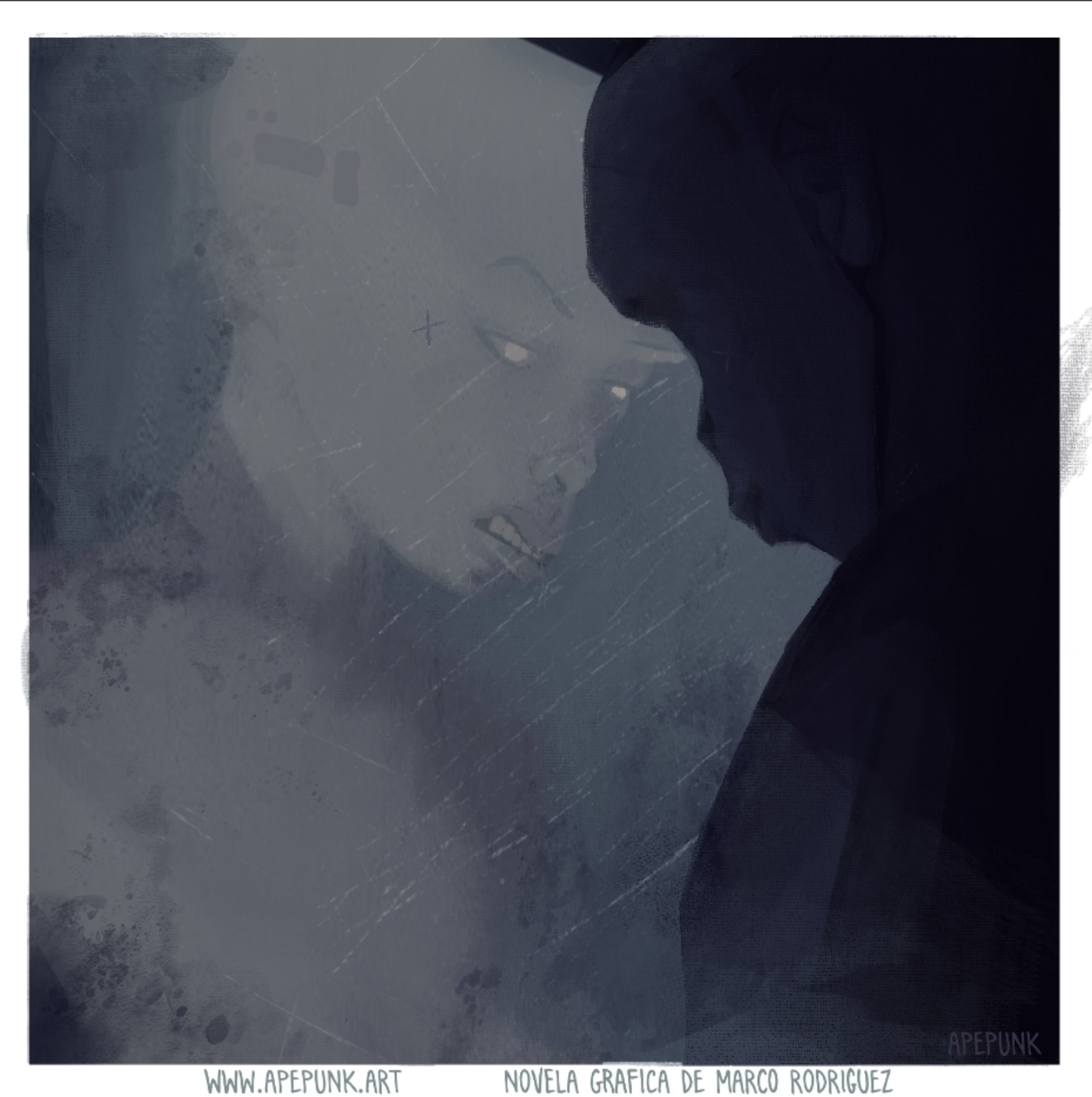
RED is a conscious ape and the visible leader of the terrorist group MORBID. He does not seek to reform the system, but to expose it. Violence, for him, is a tool to disrupt the normality that allows power to operate without being questioned.

His position allows no gray areas. RED learned that the system cannot be corrected from within, nor through reason — he tried, and it consumed him.

Since then, he believes that anyone who contributes to sustaining it — through action or omission — is part of the problem.
Core line: Normality is the true violence.
SEBASTIAN SAGASSE
Leader of the G-100 / Architect of Order
SEBASTIAN SAGASSE, founding leader of the G-100, sees himself as a designer of the future. He believes the greatest threat is not dehumanization, but chaos.

For him, what defines the human condition — pain, doubt, fatigue, the fear of making mistakes — is not a virtue, but a structural weakness.Consciousness, understood as emotional vulnerability and unpredictability, is a technical problem that must be corrected through control, efficiency, and predictability.

SEBASTIAN SAGASSE does not act out of cruelty, but out of conviction: in his logic, reducing the human condition is a necessary cost to sustain order.
Core line: Rejecting sacrifice means choosing collapse.
THE HAND
Inner Mechanism of the G-100
THE HAND is a group of young G-100 members positioned as the next generation of power. It embodies the system’s apathetic and mechanical logic.It coordinates, monitors, and acts without ethical deliberation — decisions are made solely to ensure the continuity of the established order.

For THE HAND, the escalation of violence presents no moral dilemma. It is simply another variable, one that can be studied, managed, and leveraged as an advantage.
Core line: The market does not make mistakes.
FOLLOW
The connection
APEPUNK is still in development.
This space exists for those who choose to follow the process, not just the outcome.

An open preview is available, with new pages released progressively.

Extended access is shared with those who choose to stay connected.
or
Contact:
ABOUT APEPUNK
Origin, Intention, and Creative Framework
Origin of the Project
APEPUNK emerges from a persistent concern: the normalization of systems that operate with precision, even as they erode what makes us human.

It does not originate from a question about the future, but from an observation of the present. The work examines how concepts such as efficiency, stability, and progress become unquestionable — even when they imply exclusion, sacrifice, and a loss of meaning.

Here, science fiction does not function as a warning, but as a space to critically examine, from a distance, what we have already come to accept as inevitable.
Narrative Intention
APEPUNK does not offer solutions or redemption. It does not seek to assign individual blame or present clear alternatives.

Its focus lies in exposing the relationships, decisions, and fractures that emerge when systems stop being questioned and demand only adaptation.

The work explores how consciousness, ethics, and empathy become burdens within an environment designed to optimize outcomes, not to protect those who inhabit it.

In this context, every conflict is not an anomaly, but a direct consequence of how the system functions.
The Author
APEPUNK is a graphic novel created by MARCO RODRIGUEZ — economist and illustrator.

The project is developed as a long-form narrative work that combines writing and visual exploration.

It is conceived as a space for observation rather than assertion — a way of engaging with uncomfortable questions without resolving them.

The focus is not on spectacle or direct allegory, but on moral conflict, ambiguity, and the consequences of inhabiting a world that continues to function even as it becomes uninhabitable.
A system that prevents collapse may be more violent than collapse itself.